
Your dog will figure it out.
Faster than you think.
Most dogs take to coir within 1-3 days. Coir smells like the outside world they already know. Their instinct does most of the work. Here's how to help it along.
The 3-day guide
Introduce, don't force
- 1.Place the coir pad in the tray. Put it where your dog naturally gravitates, balcony, bathroom corner, near the door.
- 2.Let your dog sniff it freely. Don't push their nose toward it. Just let them investigate.
- 3.When they sniff it, say their name warmly and give a treat. You're associating the pad with good things.
- 4.If they go on it, even accidentally, treat immediately and make a fuss. Big celebration.
- 5.If they don't use it on Day 1, that's normal. Don't stress. Don't scold.
Create the habit window
- 1.Take them to the pad first thing in the morning before any walk. Stay near it with them for 5-10 minutes.
- 2.Use a word consistently, 'go here', 'toilet', whatever you choose. Say it calmly.
- 3.After meals and naps, guide them to the pad. These are peak toilet moments.
- 4.If they use it, treat and praise every single time. No exceptions.
- 5.If they go somewhere else, clean it without comment. No scolding, they're still learning where.
Reinforce and relax
- 1.By now most dogs will have used the pad at least once. Continue the morning and post-meal routine.
- 2.Start reducing treats gradually but keep the praise.
- 3.Keep the pad in the same spot, consistency matters more than anything.
- 4.If you have a smaller dog, you may be able to skip night walks entirely by Day 3.
- 5.For puppies: they have smaller bladders. Give them more opportunities and more treats.
By dog type
Puppies (under 6 months)
More frequent trips, every 2 hours. Bigger treats. More patience. Puppies are still learning body awareness, not just location.
Adult dogs (new to indoor potty)
Pair coir with their existing potty signal if they have one. Reduce outdoor trips gradually, don't cut cold turkey.
Senior dogs
Senior dogs with arthritis or mobility issues often take to coir the fastest, it reduces the strain of long walks. Place it very close to where they sleep.
Labradors & large breeds
Go straight to size L. Labs are motivated by food, use high-value treats on Day 1. They're fast learners when treats are on the table.
Indies (INDogs)
Indies are often highly independent and instinct-driven. Coir's natural scent works especially well, they may not need much guidance at all.
Small breeds (Pomeranian, Shih Tzu)
Small bladders mean more frequent use. Size S is perfect. Place it somewhere very accessible, they're not trekking across the house.
Training questions
My dog sniffs the pad but won't use it. What do I do?
Keep going. Sniffing is the first step. Don't move the pad, don't add anything to it, don't scold. Continue the post-meal, post-nap routine. Most dogs that sniff on Day 1 use it by Day 2.
My dog used it once and then stopped. Normal?
Very normal. Dogs test things. Keep rewarding every use you catch. Don't react to misses. The pattern establishes itself with consistency, not pressure.
Should I spray anything on the coir to attract them?
No. The natural coir scent is the draw. Added sprays can actually confuse dogs with strong noses. Keep it plain.
My dog goes on the tray edges, not the pad.
This is an aiming issue, especially common with male dogs. Try a larger size pad or a tray with higher sides. Most dogs self-correct within a few days.
Can I train my dog to use both, coir and outdoor?
Yes. Many dogs do both without confusion, especially after the coir habit is established. Indoor coir doesn't replace outdoor time, it replaces the panic trips.
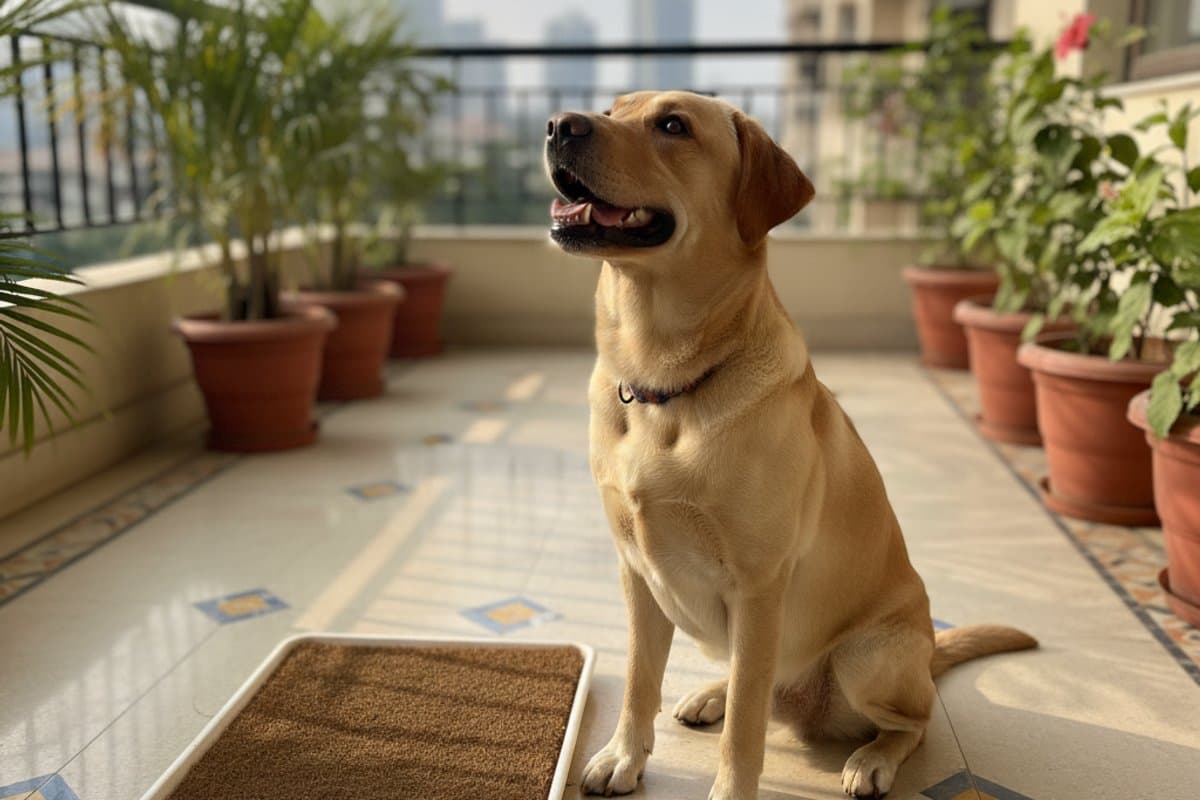
The goal: a relaxed routine.
Training isn't about making your dog do something unnatural. It's about showing them that the coir pad is as good a place as the garden downstairs. Once they know, they know.
And then you stop planning your evenings around elevator schedules.
Ready to start?
Get your Coir Starter Kit and begin tomorrow morning.
Get Yours →